
Multiplayer on the Big Screen: Why Groups Stop Where They Can Play Together
People rarely visit a trade fair, a festival or a shopping center alone. They come with colleagues, friends, family. A solo game on a screen reaches one of them at a time while the others wait. A multiplayer game reaches the whole group, and that changes the dynamic in front of the screen.
From audience to opponents
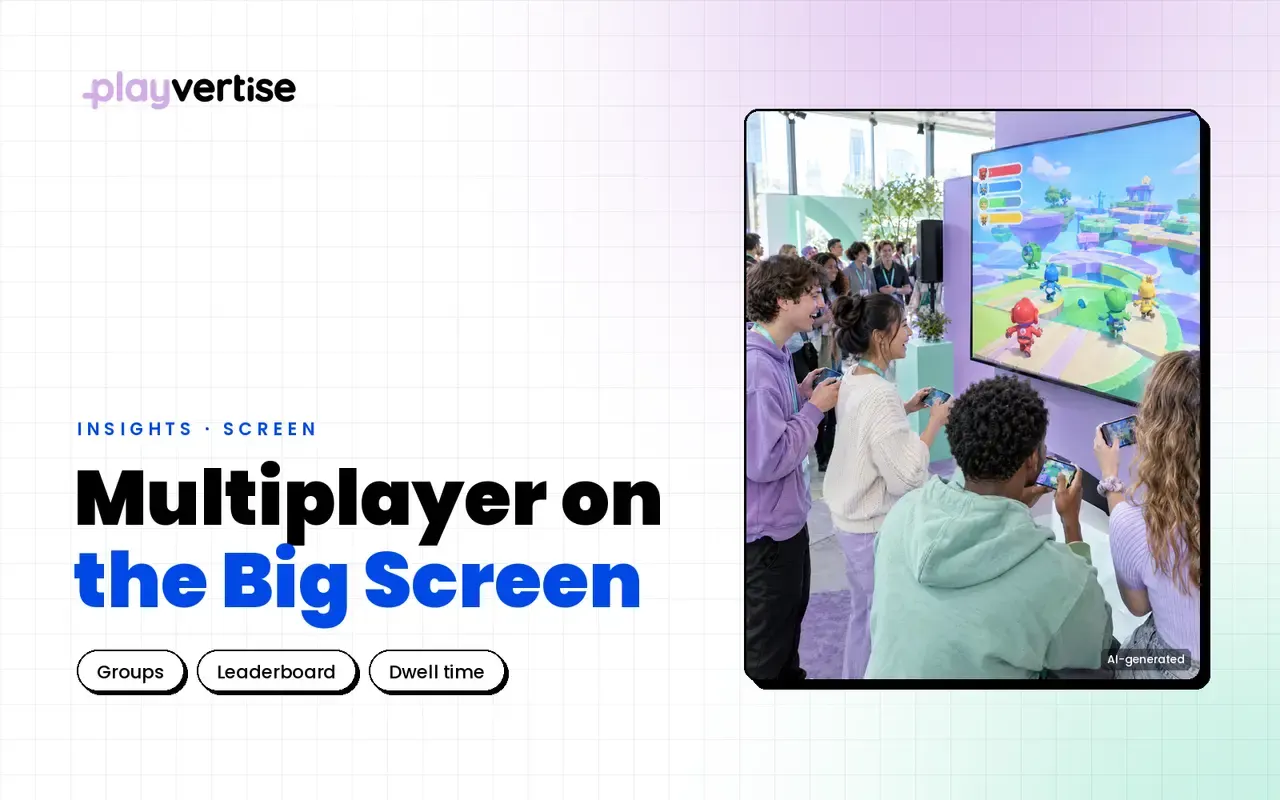
In multiplayer mode several people join the same round from their own phones and play against each other on the big screen. Each phone becomes a controller, each player has a character, and the result is visible to everyone standing around.
The effect is easy to observe. A group that would have walked past stops because one of them wants to try. The others join instead of waiting. And the people who are not playing watch, comment and want the next round. A screen that hosts a match draws a crowd in a way a single player rarely does.
Competition does the rest
Nothing keeps people at a screen like a score to beat. A live leaderboard next to the game turns each round into a challenge for the next group, and colleagues who lost want a rematch. That is dwell time nobody had to ask for.
For the brand this means longer contact with the same people, and more people in the frame at once. Every player is a contact, captured before the round starts.
Same order as always: data first
Multiplayer does not change the flow. Every player scans the QR code, enters the data you defined and confirms their opt-ins on their own phone. Only then do they join the lobby. A group of four is four contacts, not one.
Where multiplayer fits best
- Trade fair stands: colleagues visit together, and a match is an easy opening for the team.
- Events and festivals: groups of friends who are in the mood to compete.
- Shopping centers: families and teenagers who stop on the way through.
- Sponsoring and sports: fans who want to beat each other, ideally in the brand's colors.
How it is set up
In the GameHub you choose the Screen mode, pick a game from the game library and brand it end to end, from logo and colors to sprites, prize pool and lead fields. Multiplayer is added to the build. The game runs inside the existing screen CMS, with no app and no extra hardware.
During the monthly license term the build belongs to you and runs on all screens your mode covers, adapted to the season if you want.
Bottom line
A solo game wins one player. A multiplayer game wins the group, the onlookers and the next group in line. On a busy floor, that is the difference between a screen people glance at and a screen people gather around.
Interactive advertising made easy. Want to see what a match in your brand would look like? Let's talk at playvertise.eu.
Want to try this idea as a campaign?
We translate the idea from this article into a concrete game setup, tailored to your channel and budget.
20 minutes via video call, no obligation. We usually answer requests within 24 hours.