Gamification KPIs: What Campaigns Can Deliver
Gamification is more than a show element. Set up properly, it delivers hard KPIs such as plays, play duration, leads and opt-ins, making campaign success measurable.
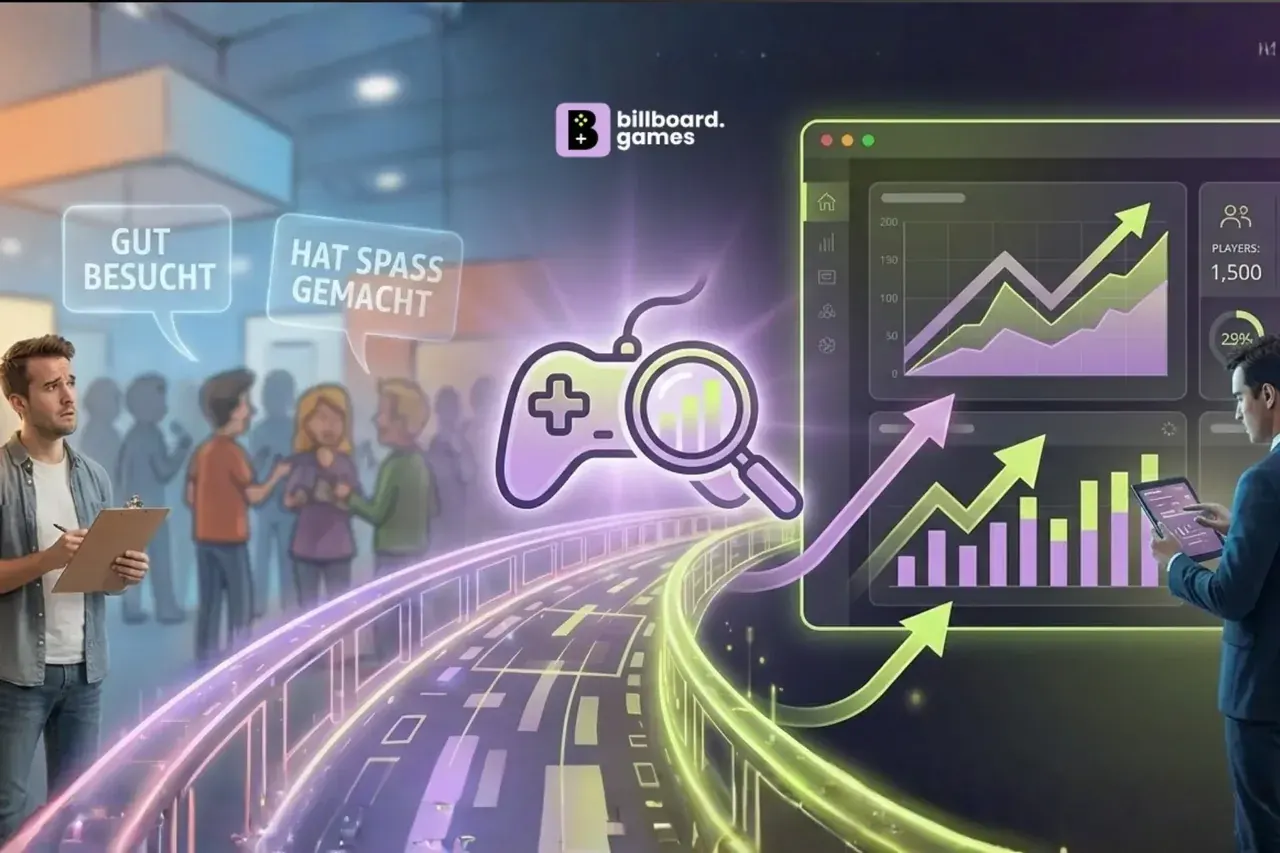
“It was busy” is not a report
After trade shows or campaigns you often hear things like:
- “Our booth was well attended.”
- “People had fun.”
- “The giveaway went down well.”
That sounds positive but is hard to translate into budgets and planning. Gamification platforms can make a difference here, because they turn vague impressions into concrete numbers.
Typical KPIs for gamification campaigns
A well-designed setup can measure, among other things:
- Number of players: how many people actually took part?
- Play duration: how long do they stay in the experience?
- Drop-off rates: where do people quit?
- Lead conversion: how many players left their details?
- Redemption rate: how many of the codes or prizes handed out were used?
These metrics help not only with reporting but also with future decisions.
What you see in the GameHub
In the playvertise dashboard, the key metrics come in in real time and can be exported as CSV:
- Plays: every round started, with a timeline across the campaign
- Scans: how often the QR code was opened
- Dwell time: how long people played
- Prizes and redemptions: which prizes were awarded and redeemed
- Contacts and opt-ins: who left their details and which consents they gave
From raw numbers to KPIs
Single numbers say little. They become meaningful in relation to each other:
- Scan-to-play rate: how many people who open the QR code actually start a game? A low value points to a barrier before the game, such as too many required fields.
- Lead rate: how many players leave contact details with consent? This is the metric sales and marketing care about most.
- Plays per hour: when was the booth or screen busiest? That helps with staffing and placement.
- Cost per lead: investment divided by the number of qualified contacts, directly comparable with flyers, prize draw cards or social ads.
Examples from real activations
Our references show what these numbers look like. At marke[ding] 2025, around 1,500 people played the spin the wheel at the Landtmann’s Original booth in a single show day. For FRIPAC-MEDIS at Top Hair 2026, more than 600 prizes were awarded in two show days, with newsletter opt-ins collected alongside. The Argeta promotion at Wien Mitte The Mall reached around 1,500 participants in three days. Numbers like these come from a clear flow: scan the QR code, enter details with consent, play, see the prize.
What to define before the activation
- A goal with a number. For example 300 contacts with newsletter opt-in at the trade show instead of “as many leads as possible”.
- The required fields. Every additional field lowers participation. Only ask for what you will actually use afterwards.
- The time frame. One trade show, a week in the shop window or a month online: plays per day only become comparable with a fixed time frame.
- A baseline. How many contacts did your last appearance bring with business cards or a prize draw box? Only then can you put a number on the effect.
What counts after the activation
The real value often only appears after the event. Contacts go into your CRM as a CSV or directly via an add-on. If you track there how many conversations, offers and deals come from game contacts, you can prove the effect all the way to revenue, and you have an argument for the next budget round that goes beyond “it was busy”.
A/B tests in real life
Digital games make it easy to vary content:
- different quiz questions,
- different prize structures,
- alternative calls to action.
Comparing the KPIs quickly shows which variant performs better. It becomes a kind of live lab for your messages, directly with your audience.
From nice-to-have to a fixed channel
The better you know your numbers, the easier it is to integrate gamification into regular marketing planning. “Let’s do a game” becomes “With game X we generate an average of Y qualified leads per day, week or event”.
That turns gamification from a colorful extra into a clearly calculable part of the marketing mix. What reporting looks like in the GameHub is shown on the platform page.
Want to try this idea as a campaign?
We translate the idea from this article into a concrete game setup, tailored to your channel and budget.
20 minutes via video call, no obligation. We usually answer requests within 24 hours.