
Gamification at the Point of Sale: Giving Shoppers a Reason to Stop in Front of Your Shelf
Shoppers arrive with a plan more often than they used to. GS1 Germany and YouGov found that shopping trips have become more planned and that fewer purchase decisions are made at the point of sale than in previous years (GS1 Germany & YouGov, 2024). For brands, that makes the few seconds in front of the shelf more valuable, and harder to win with another price tag or wobbler.
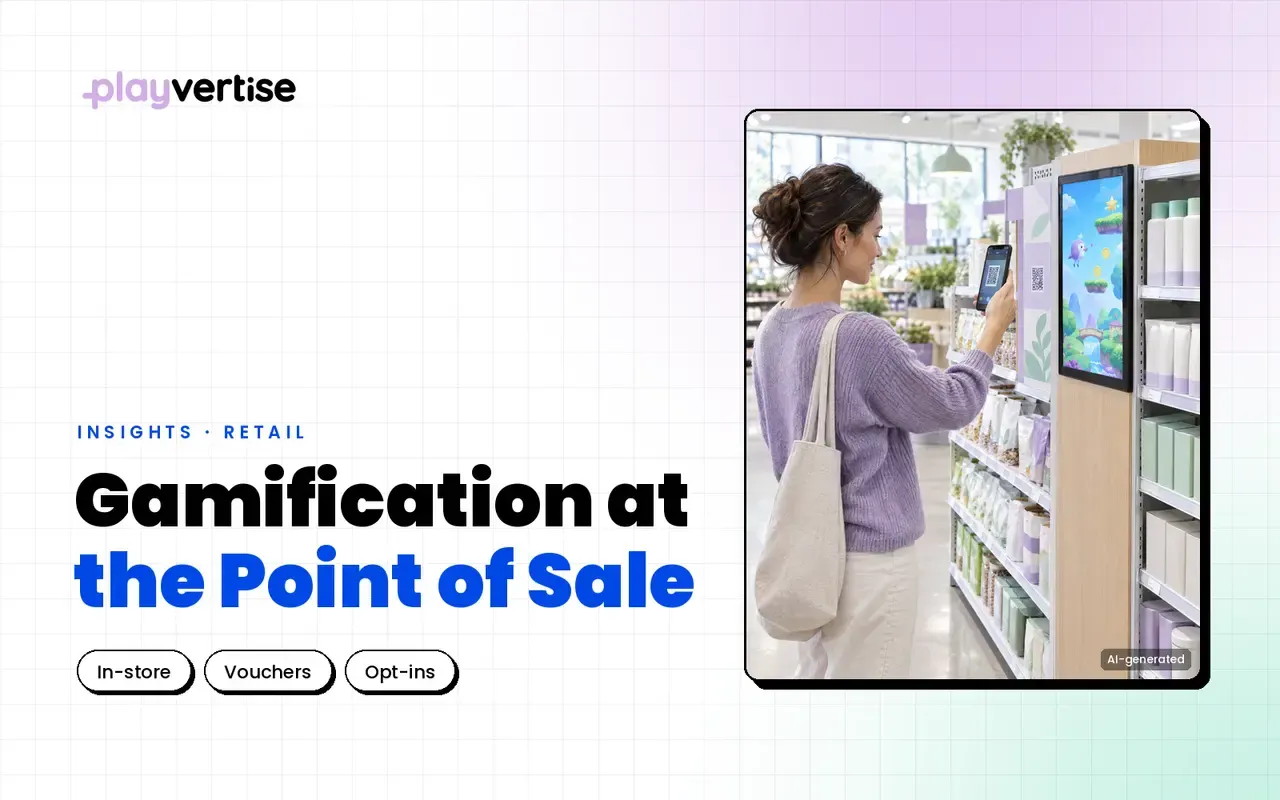
A game changes what those seconds are for.
From passing by to taking part
Most POS material asks for a glance. A game asks for a decision: scan, play, see what you won. That small step turns a shopper who was walking past into someone who stopped, spent a minute with your brand and left their contact details on the way.
The flow is always the same. A QR code on the shelf, the display or the screen in the store leads to a branded page. Shoppers enter the data you defined and confirm their opt-ins, then the game starts. Every play begins with a contact, not the other way round.
Two ways into the store
In the GameHub you choose the mode first. That decision depends on what you have in the store.
- Screen and Digital Signage: the game runs on a display in the store or the window, and shoppers play with their phone as the controller. Ideal for promotions with visibility, launches and in-store weeks.
- Mobile and Web: the game runs on the shopper's phone behind a QR code on packaging, shelf strips or receipts. No screen needed, and it works in every store at once.
Then you pick a game from the game library and brand it end to end: logo, colors, sprites, prize pool and win probabilities, and the lead fields.
A prize that brings people back
The prize logic is where POS gamification connects to sales. A voucher that can only be redeemed in the store turns a play into a second visit. An instant win at the shelf makes the moment feel worth it. And a prize pool you control means you know in advance how many vouchers go out and at what probability.
What retail teams get out of it
Plays and new opt-in contacts appear in the dashboard in real time and can be exported as a CSV. That gives trade marketing something the classic display cannot deliver: a count of who took part, by store or by period, and a list of people who agreed to hear from the brand.
One build for many stores and seasons
The game is licensed monthly. During the license term the build belongs to you and runs as often as you like across the channels your mode covers, in one store or across the whole network. It can be adapted to the season along the way, with a new prize pool for Easter, back to school or Christmas, without starting over.
Bottom line
When more decisions are made before people enter the store, the moments in front of the shelf need to work harder. A game turns them into participation, a contact and often a reason to come back.
Interactive advertising made easy. Planning your next in-store promotion? Let's look at what it could look like as a game, at playvertise.eu.
Sources
- GS1 Germany & YouGov. (2024). Plan- und Spontankaufstudie 2024 [Planned and impulse purchase study 2024]. Reported by Lebensmittel Zeitung. lebensmittelzeitung.net
Want to try this idea as a campaign?
We translate the idea from this article into a concrete game setup, tailored to your channel and budget.
No obligation, on a video call