
Prize Pools and Win Probabilities: How to Plan the Part of the Game Everyone Asks About
The first question players ask is rarely about the game. It is: what can I win? The prize logic decides whether people play, whether they come back, and whether the campaign stays within budget. It deserves the same planning as the creative.
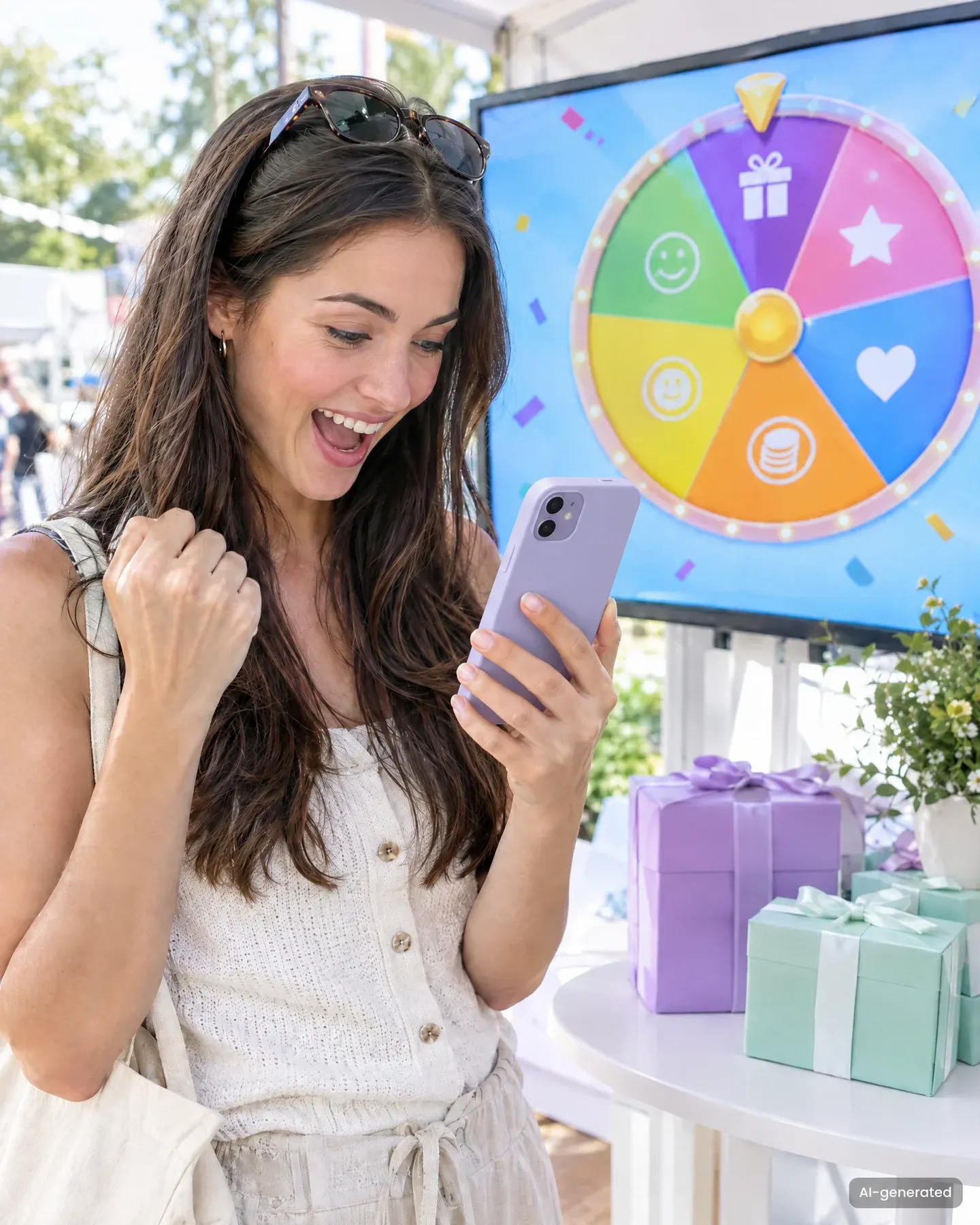
Start with the goal, not the prize
Before you pick prizes, decide what the game should achieve. A launch at a trade fair needs many plays and a lively stand. A loyalty campaign needs people to return. A store promotion needs a reason to come back to the shop. Each goal points to a different prize structure.
- Reach and footfall: many small prizes with a high win rate, so almost everyone leaves with something.
- Return visits: vouchers that can only be redeemed in the store or online shop.
- Attention for a hero product: few main prizes that people talk about, plus small instant wins.
Probabilities are a design decision
In the GameHub you set the prize pool and the win probability for each prize. That is where the budget is controlled. If you know that 2,000 plays are likely at a fair and you have 200 vouchers, you can set the probability so the vouchers last until the last day, not the first afternoon.
A good rule: people should win often enough that the game feels fair, and rarely enough that the main prize still feels special. A pool that is empty by noon frustrates the afternoon visitors. A pool nobody wins from makes the game feel rigged.
Make the prizes visible
Players commit faster when they see what is at stake. Show the prizes on the screen before the round, on the landing page and at the stand. A live leaderboard adds a second kind of reward: the best score of the day, with a prize for the top spot.
Keep the rules clean
Every prize game needs clear conditions of participation: who can take part, how winners are determined, how prizes are delivered, and how the data is used. Put them on the landing page next to the opt-ins, so they are confirmed before the game starts. Your legal team or agency should review them for the market you run in. What applies to a giveaway at a trade show booth in Austria and Germany is covered in our post on trade show giveaways.
Adjust as you go
The prize pool is not fixed for the whole license term. During the monthly license you can swap prizes between activations, adapt them to the season or rebalance probabilities after the first event. Plays and new contacts appear in the dashboard in real time, so you can see early whether the logic works.
Bottom line
The prize logic is not an afterthought. It decides how many people play, how long the prizes last and what the campaign costs. Plan it from the goal backwards, and keep the rules visible.
Interactive advertising made easy. Want help planning the prize logic for your next game? Let's talk at playvertise.eu.
Want to try this idea as a campaign?
We translate the idea from this article into a concrete game setup, tailored to your channel and budget.
20 minutes via video call, no obligation. We usually answer requests within 24 hours.