
Sponsoring at Sports Events: How to Make the Stadium Screen Playable
Sponsors pay for visibility: the logo on the perimeter board, the name on the jersey, the spot on the video wall at half time. What they rarely get is interaction. Fans see the brand hundreds of times during a match, and most of them could not say afterwards which brands were on the boards.
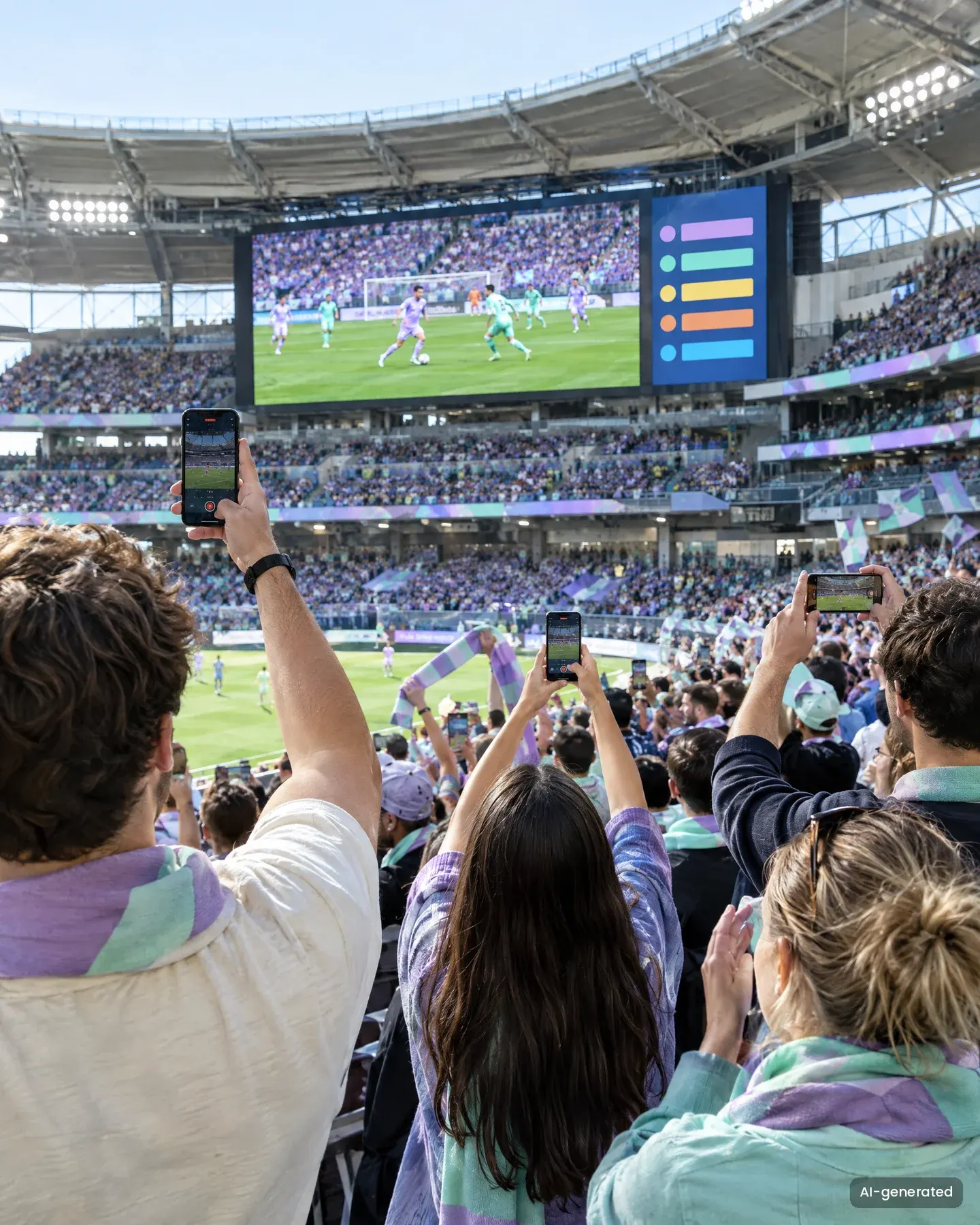
A branded game gives sponsors something the logo alone cannot: a few minutes in which fans actively engage with the brand, and a contact at the end.
The break is the best slot
Every event has its pauses: half time, timeouts, the wait before kick-off, the time between heats. The screens are on, the crowd is there, and most of the content is filler. That is the moment for a game. Fans scan the QR code on the screen, enter their data and confirm their opt-ins, and the game starts on the big screen with their phone as the controller.
With the multiplayer add-on, several fans play against each other at once. A whole block can follow the match on the video wall, and the result becomes a talking point in the stands.
The sponsor is the game
Branding covers the whole game, not just a logo in the corner: colors, sprites, prize pool and lead fields all carry the sponsor's brand. A beverage brand can let fans catch cans, a car brand can send them round a track, a bank can let them collect coins. Fans don't just watch an ad during the break, they play it.
Prizes fans actually want
The prize logic is where sponsoring and sport meet. Signed jerseys, meet and greets, tickets for the next home game, vouchers from the sponsor: prizes like these make people play, and the prize pool and win probabilities decide how many fans win something and whether the prizes last until the final whistle. A leaderboard over the whole season keeps fans coming back match after match.
What sponsors can report
Visibility is hard to prove. Participation is not. Plays and new opt-in contacts appear in the dashboard in real time and can be exported as a CSV. A sponsor can show not only that the brand was seen, but how many fans played and how many agreed to hear from it. That makes the next sponsoring renewal a different conversation.
Built for the existing infrastructure
The game runs as a web application in the stadium's or venue's screen CMS, with no app and no extra hardware. In the GameHub you choose the On-Screen channel, pick a game from the game library and brand it. The game is licensed monthly: during the license term the build belongs to the sponsor and runs at every home game, fan event or store in the channel you booked, adapted to the season or a derby if you like.
Bottom line
Sponsoring buys attention. A playable screen turns that attention into interaction, and interaction into contacts a sponsor can measure and use.
Interactive advertising made easy. Want to make your next sponsorship playable? Let's talk at playvertise.eu.
Want to try this idea as a campaign?
We translate the idea from this article into a concrete game setup, tailored to your channel and budget.
20 minutes via video call, no obligation. We usually answer requests within 24 hours.